

Stop and Reverse the Aging Process: What You Can Do Today

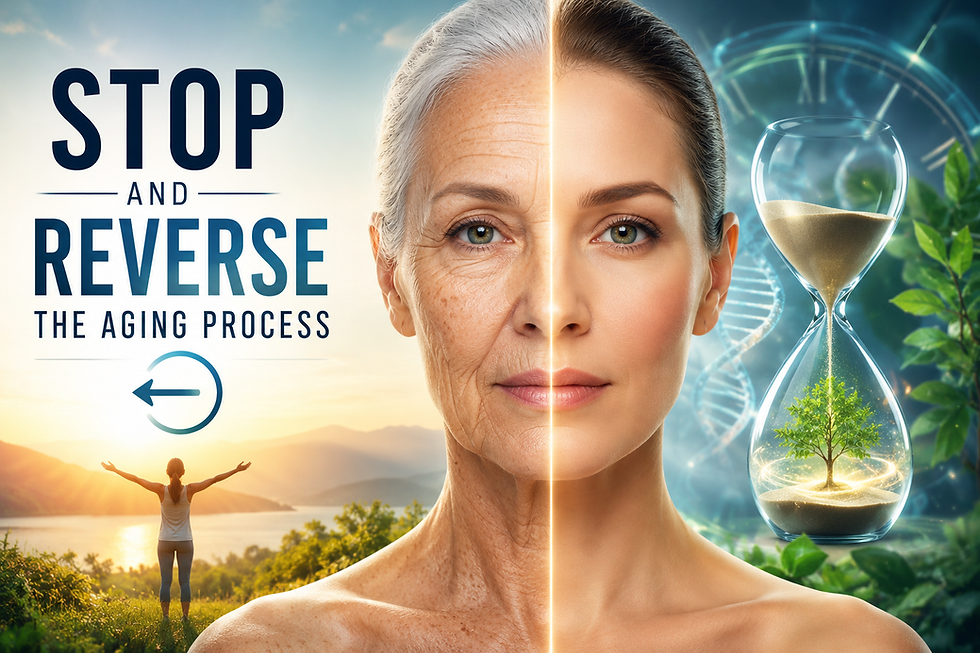
Getting older is something none of us can stop. But that doesn't mean we have to simply accept feeling older. There is a big difference between chronological age and biological age. Your chronological age is how many birthdays you've had. Your biological age is more about how well your body and brain are functioning. The good news is that many of the things that influence how we age are connected to the choices we make every day.
What Really Causes Us to "Age"?
Aging isn't just about getting another year older. It's influenced by many things, including:
Chronic inflammation
Poor metabolic health
Loss of muscle mass
Lack of physical activity
Poor sleep
Chronic stress
Poor nutrition
Reduced brain stimulation
Social isolation
Lack of recovery
The important thing is that many of these factors can be influenced. Think About Your Biological Age Ask yourself: Do I have good energy throughout the day? Can I easily get up from the floor? Can I walk up stairs without becoming exhausted? Do I have good balance?Am I maintaining my muscle? Can I concentrate? Do I remember things easily? Am I sleeping well? Can I handle stress effectively? Can I still do the activities I enjoy? These questions may tell you more about how you're aging than the number on your driver's license.
Muscle Is One of Your Best Investments As we get older, maintaining muscle becomes increasingly important. Muscle isn't just about appearance. It helps with:
Strength
Balance
Mobility
Glucose regulation
Metabolic health
Independence
Physical resilience
One of the simplest things you can do for healthy aging is strength training consistently. You don't have to become a bodybuilder. You just need to give your body a reason to maintain muscle. Keep Moving, Exercise isn't the only movement that matters. Try to: Walk every day, take the stairs, get up from your desk regularly, play a sport, Garden, Hike, Stretch, Work on balance, Strength train. Move throughout the day instead of sitting for hours Your body is designed to move. And movement gives your brain and body information that they still need these abilities. Don't Forget Your Brain Healthy aging isn't just about your heart and muscles. Your brain needs exercise too. Challenge it by: Learning something new, Reading, Learning an instrument, Playing a new sport, Learning a language, Doing puzzles, Changing your normal routine, Having meaningful conversations, Practicing coordination, Trying something that doesn't come easily Your brain has the ability to adapt and change throughout life. That's called neuroplasticity. One of the best things you can do for your brain is to give it something new to figure out.
Sleep Is Not Optional One of the biggest mistakes I see people make is treating sleep like it's something they can sacrifice whenever life gets busy. Your body needs recovery. Good sleep supports: Brain function, Memory, Mood, Metabolism, Immune function, Hormonal regulation, Physical recovery, Energy Instead of asking, "How little sleep can I get away with?" Try asking: "What can I change so that I consistently get the sleep my body needs?"
What You Eat Matters Your body needs the raw materials to repair and maintain itself. Focus on: Adequate protein, Vegetables, Fiber, Healthy fats, Nutrient-dense foods, Good hydration, Minimally processed foods You don't have to eat perfectly. What matters most is what you do consistently. Stress Can Age You Stress isn't always bad. Exercise is a form of stress. Learning something difficult is a form of stress. Even challenging yourself physically can be a form of stress. The problem is chronic stress without adequate recovery. If your nervous system is constantly operating under stress, eventually your ability to recover can suffer.
Consider building recovery into your life through:
Exercise
Sleep
Time outside
Breathing exercises
Prayer or meditation
Meaningful relationships
Hobbies
Time away from technology
Doing things that genuinely help you relax Your Future Self Is Depending on You Here's an exercise I like to have people do: Imagine yourself 10 years from now. Ask yourself: Can I get off the floor easily? Can I travel? Can I play with my kids or grandchildren? Can I climb stairs? Can I participate in the activities I enjoy? Can I think clearly? Do I have energy? Am I independent? Am I still doing the things that make me happy? Then ask yourself: "What am I doing today that is creating that future?" And just as importantly: "What am I doing today that could be taking me away from it?" You Don't Have to Change Everything One of the biggest mistakes people make is trying to completely change their life overnight. Instead, start with one thing. Pick one: Walk more, Start strength training, Improve your protein intake, Eat more vegetables, Improve your sleep, Reduce processed foods, Learn something new, Spend more time with people you care about, Find a better way to manage stress Then make it consistent. Small changes repeated over months and years can have a much bigger impact than a huge change that lasts two weeks. Four Questions to Ask Yourself Every Day If you want a simple framework for healthy aging, ask yourself:
How did I MOVE today? How did I FUEL my body today? How did I RECOVER today? How did I CHALLENGE my brain today? You don't have to be perfect with all four every day. But the more consistently you can answer "yes," the more you're giving your body and brain the environment they need to function well.
The Goal Isn't Just to Live Longer We can't control everything about aging. But we can influence many of the things that determine how well we age. Your birthday tells you how many years you've been alive. It doesn't tell you how strong you are. It doesn't tell you how well your brain is functioning. It doesn't tell you how well you move. It doesn't tell you how much energy you have. It doesn't tell you whether you're capable of doing the things you love. So instead of only asking: "How old am I?" Ask: "How well am I aging?" And then ask yourself: "What's one thing I can do today that my future self will thank me for?" Because the goal isn't simply to add years to your life. The goal is to add life to your years.
Ready to Better Understand Your Nervous System?
At Life Springs Family Chiropractic, we take a brain-based approach to health. Our neurological evaluations are designed to look beyond symptoms and identify how stress, movement, and nervous system function may be affecting your overall health and performance.
Our care may incorporate brain-based chiropractic adjustments, functional neurology, neurofeedback, laser therapy, HRV testing, and functional medicine based on each patient’s individual needs.
If you are experiencing chronic stress, brain fog, headaches, poor sleep, balance concerns, difficulty focusing, or ongoing discomfort, a neurological evaluation may provide valuable insight into how your brain and body are functioning together.
Life Springs Family Chiropractic – Denver, CO
Call/Text: (303) 770-0605
Missed the Workshop? Watch the Replay on Facebook | YouTube


